
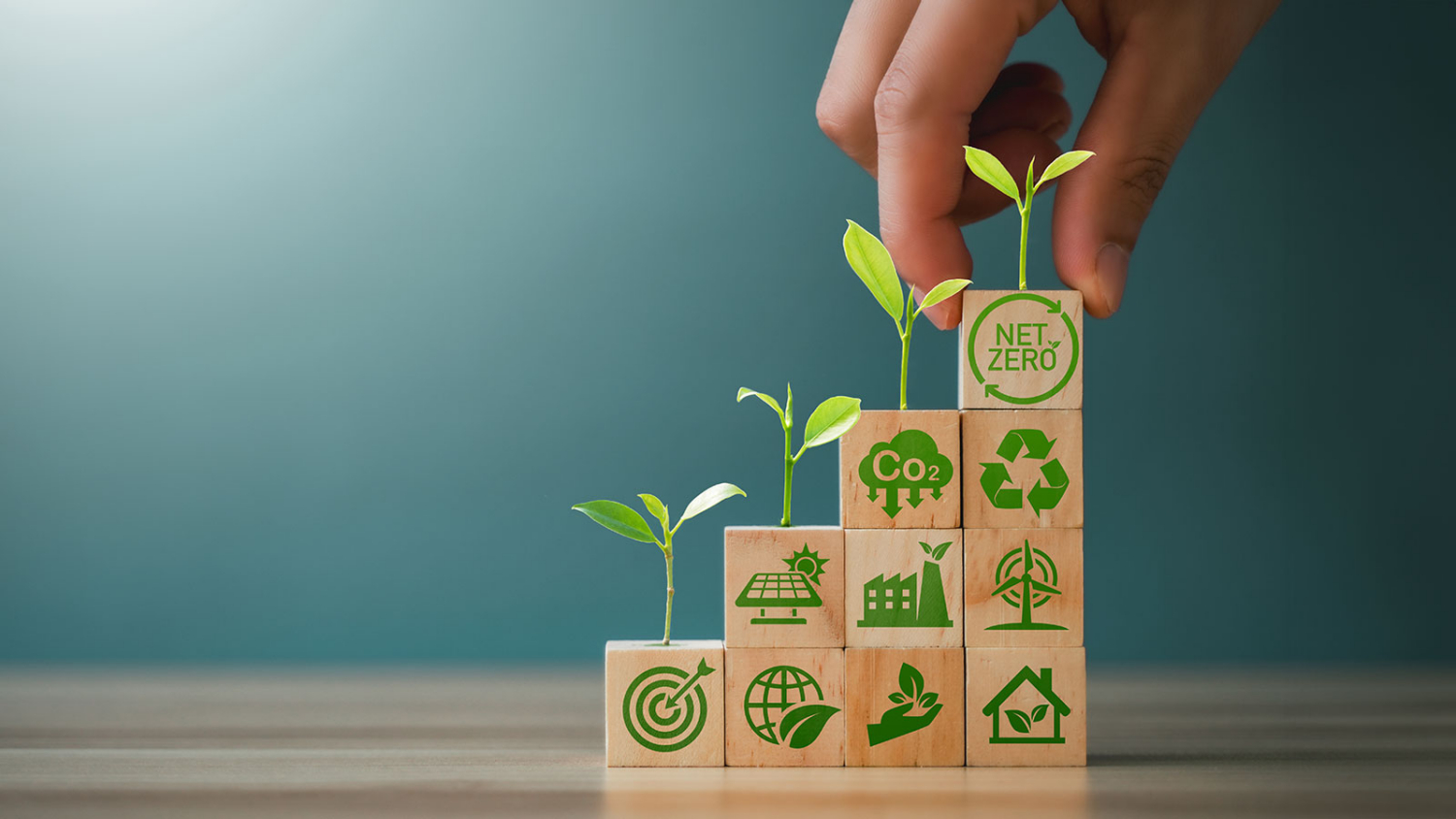
The Evolving Net Zero Landscape
July 2, 2026
The past year has brought major advances in the standards which guide credible corporate climate action. As more organisations set net zero targets, there is a growing focus on what credible, verifiable progress actually requires, both in how emissions are measured and in how organisations plan and demonstrate their transition. Two recent developments speak directly to this, and together they reflect a maturing of the net zero landscape, moving from target-setting toward structured, verifiable implementation.

A standard for net zero transition plans
In June 2026, the International Organization for Standardization (ISO) launched a public consultation on the draft ISO 14060 Net Zero Aligned Organizations Standard. The draft standard is designed to provide organisations of all sizes and sectors with a globally consistent framework for developing credible and verifiable net zero transition plans.
Following ISO 14060, organisations would be required to publish a detailed transition plan within two years of setting a net zero target. That plan would need to cover:
- Interim and long-term emissions reduction targets
- Timelines for delivery
- How the net zero strategy integrates into the broader business model
- How progress will be measured and reported over time
A dedicated pathway is included for small and medium-sized enterprises, allowing them to prioritise their most significant emissions categories and report on progress every three years rather than annually.
The 12-week public consultation runs through national standards bodies in more than 170 countries, with national consensus positions expected by early September 2026. ISO 14060 is a draft standard and its requirements may change before final publication.

The ISO and GHG Protocol partnership
While ISO 14060 addresses how organisations plan and demonstrate progress toward net zero, a parallel development is reshaping the foundation on which that planning depends: how greenhouse gas emissions are measured and reported in the first place.
In September 2025, ISO and GHG Protocol announced a strategic partnership to harmonise their existing standards portfolios and co-develop new ones. The two bodies have historically maintained separate but widely adopted frameworks, and the partnership is working toward a coherent, co-branded system designed to reduce complexity for reporting organisations and improve the comparability of disclosed emissions data[1].
Under the agreement, GHG Protocol leads the development of the aligned corporate standards suite, with ISO technical experts joining the existing working groups covering the Corporate Standard, Scope 2 Guidance, Scope 3 Standard, and Actions and Market Instruments Standard.
The first active joint workstream under the partnership is a new Product Carbon Footprint standard, developed through a dedicated Joint Working Group. The joint standard will build on ISO 14067 Greenhouse Gases Requirements and Guidelines for Quantification and the GHG Protocol Product Life Cycle Accounting and Reporting Standard. It is also intended to support implementation of Carbon Border Adjustment Mechanisms, which depend on robust and comparable product-level emissions data across supply chains.
Existing standards from both bodies remain in effect while new co-branded standards are developed. Both organisations have committed to a transition process designed to minimise disruption for current users.
What this means for organisations
For organisations already reporting against GHG Protocol or ISO frameworks, the immediate impact of the partnership is limited, as existing standards remain valid and no transition requirements have been announced. ISO 14060 remains in draft, but it offers a clear indication of where expectations are heading. The standard sets out what credible transition planning is expected to look like as investor scrutiny, regulatory requirements, and disclosure frameworks develop.

For organisations in Australia, where mandatory climate disclosure under AASB S2 is being phased in, the underlying requirements are already converging: robust emissions data, sound governance, and structured transition plans. Organisations that build this foundation now will be better placed as standards formalise, rather than treating it as a future compliance exercise.
How Cress can help
At Cress, we support organisations to measure their emissions, develop credible emissions reduction pathways, set science-based targets, prepare transition plans and strengthen climate governance. As the international standards underpinning this work continue to develop, we help clients stay current and ensure their approach aligns with emerging best practice.
Get in touch with us today.
Cress is the Hydroflux Group’s in-house sustainability consulting team, operating as a specialised division and driven by a simple but powerful goal: to help organisations across Australia, New Zealand and the Pacific region create a more sustainable future. As a young and agile team, we combine technical expertise with fresh, forward-thinking approaches to help clients navigate complex challenges across climate risk, emissions reduction, modern slavery, water stewardship, and ESG reporting, building on the Hydroflux legacy of engineering excellence while bringing a sustainability lens to the industries and communities shaping the future of our region.
[1] See more at: https://ghgprotocol.org/blog/iso-ghg-protocol-partnership-frequently-asked-questions
Up Next

Fleet Electrification