WGEA Reporting – Start Preparing for Upcoming Submission Deadlines
March 9, 2026
The Workplace Gender Equality Agency (WGEA) reporting framework is a key part of Australia’s gender equality landscape, requiring eligible employers to report annually on workforce composition, pay, and workplace practices.
Under the Workplace Gender Equality Act 2012, WGEA’s purpose is to promote and improve gender equality in Australia workplaces, ensuring women and men have equal opportunities and participation.

Who needs to report and when?
Organisations that employ 100 or more employees in Australia are required to report to WGEA each year.
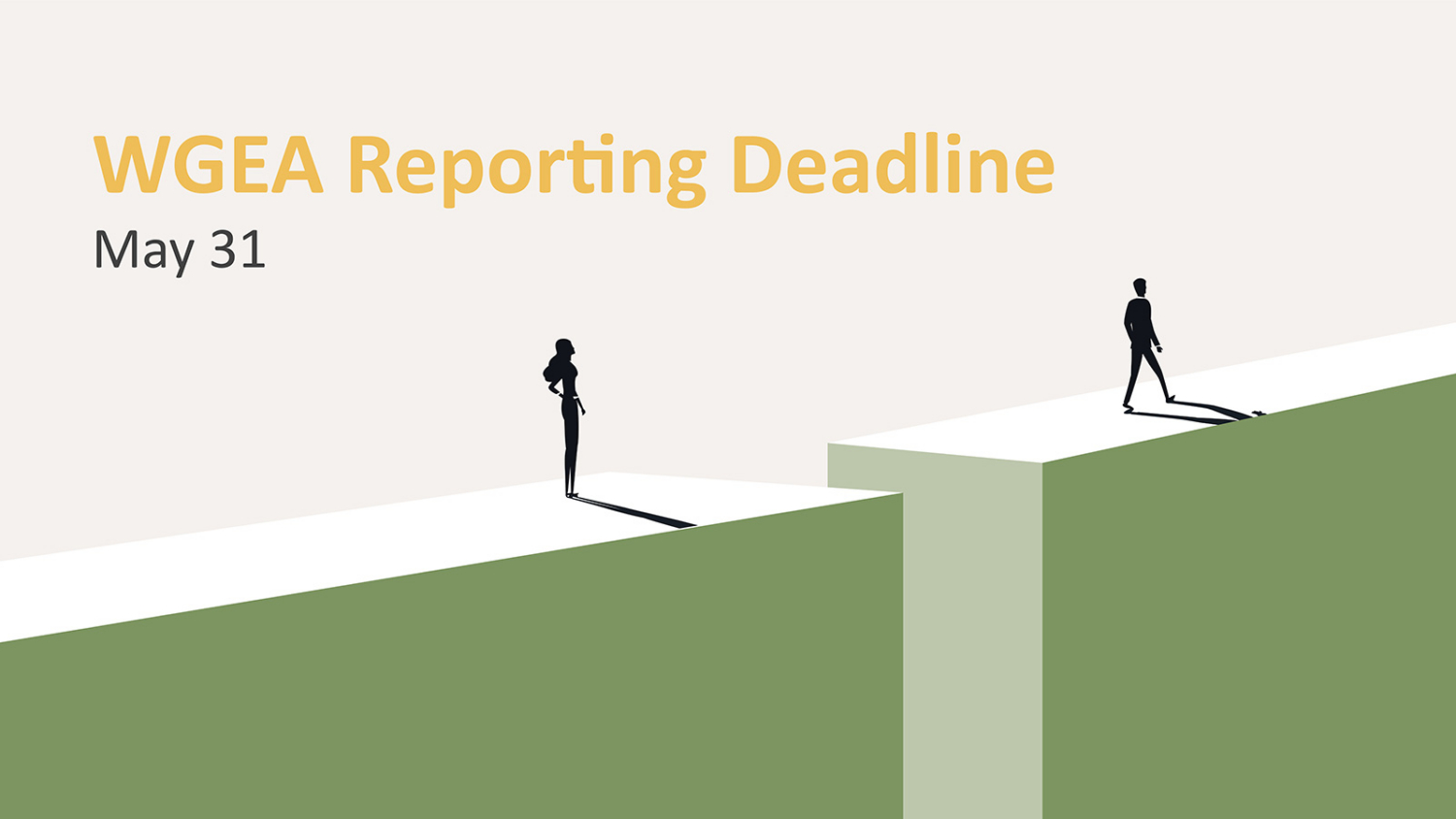
The reporting period runs from 1 April to 31 March, and reports must be lodged by 31 May following the end of the reporting period.
Employers are required to submit:
- Workforce Profile (WPP)
- Workforce Management Statistics (WMS)
- Completed questionnaire
Employers with 500 or more employees also have additional obligations to meet or demonstrate improvement against three gender equality targets over a three-year cycle.
Failure to meet reporting obligations may result in non-compliance status, reputational damage and potential ineligibility for Commonwealth procurement contracts or grants.

What are the WGEA reporting requirements?
Reporting covers policies and strategies over six Gender Equality Indicators (GEIs):
- Prevention of workplace harassment and discrimination
- Gender composition of the workforce
- Gender composition of governing bodies
- Equal remuneration between men and women
- Flexible working arrangements for employees
- Consultation with employees on issues concerning gender equality
Why is this important for your business?
WGEA reporting is more than a compliance exercise.
Transparency has increased significantly in recent years. In February 2024, WGEA first published employer-level gender pay gap data for private sector organisations with 100 or more employees. Public sector data followed in May 2025.
From March 2026, combined private and Commonwealth public sector employer data will be publicly available for the first time, covering approximately 8,500 employers and 1,600 corporate groups.
As a result, reporting outcomes are increasingly visible to boards, employees, customers and regulators.
Internally, the data submitted can highlight:
- Gender pay gaps across base salary, total remuneration or bonuses
- Representation imbalances including across leadership or board level
- Gaps in policies, accountability mechanisms or workplace practices
These insights can inform broader ESG, people and culture, and governance strategies. Meeting the deadline is important, but using the insights to drive meaningful workforce improvements is where long-term value lies.
How Cress can help
Cress supports organisations through the full WGEA reporting process, from gap analysis and data review to policy development and target setting.
We help translate the requirements into practical actions and identify opportunities to strengthen your approach to gender equality beyond compliance.
Cress is the Hydroflux Group’s in-house sustainability consulting team, operating as a specialised division and driven by a simple but powerful goal: to help organisations across Australia, New Zealand and the Pacific region create a more sustainable future. As a young and agile team, we combine technical expertise with fresh, forward-thinking approaches to help clients navigate complex challenges across climate risk, emissions reduction, modern slavery, water stewardship, and ESG reporting, building on the Hydroflux legacy of engineering excellence while bringing a sustainability lens to the industries and communities shaping the future of our region.
Up Next
World Water Day 2026 – Where Water Flows, Equality Grows