
$8.6 Billion Cost of Extreme Weather: Why Climate Scenario Analysis Matters
August 6, 2026
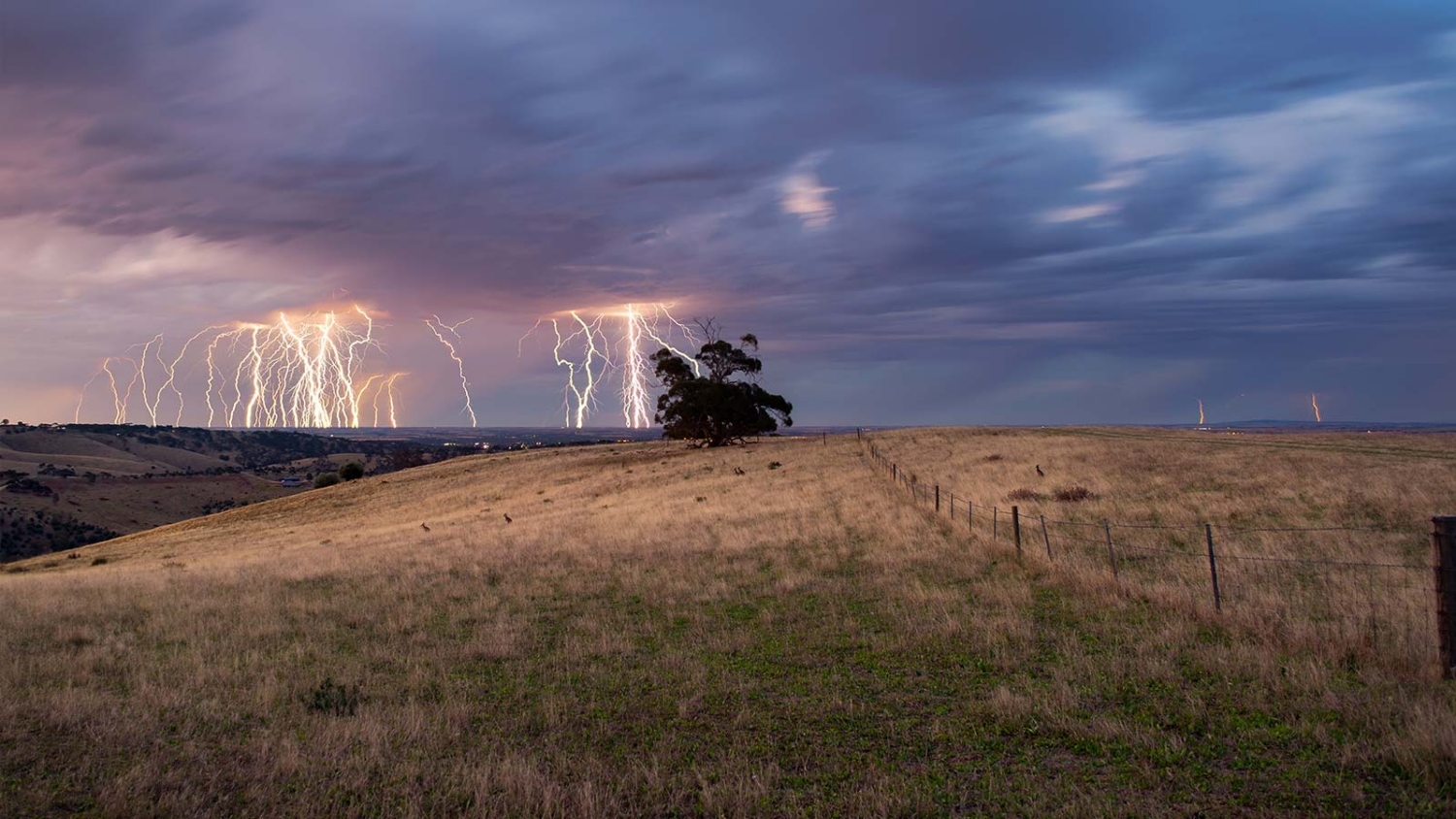
Extreme weather generated significant losses across Australia in 2025. Severe storms and hail events caused $4.8 billion in insured losses, and once broader economic costs are considered, the Insurance Council of Australia (ICA) estimates the total economic cost of extreme weather across the year is more than $8.6 billion.
For Australian businesses, these events highlight the potential financial and operational impacts of physical climate risks, from damage to assets and infrastructure to disruptions across operations and supply chains. Understanding how exposure to these events, alongside the economic shifts associated with the low-carbon transition, is one of the key purposes of climate scenario analysis. While it is often framed primarily as a requirement of mandatory climate disclosures (AASB S2), it’s also a useful planning tool to help understand where action may be needed to strengthen resilience, manage risks, and identify opportunities.
To support a more consistent approach to scenario analysis across Australia, the Department of Climate Change, Energy, the Environment and Water (DCCEEW) recently released the National Climate Scenario Guidance, providing organisations with greater clarity on how climate scenarios can be selected and applied.
What is a climate scenario?
A climate scenario is plausible description of how the future could unfold under different levels of global warming and climate action. They are not predictions or forecasts.
Scenarios are built from internally consistent assumptions about the forces that drive climate change: economic growth, technological change, and social, political and regulatory responses to changing conditions. Organisations use these scenarios to explore the risks and opportunities that a changing climate may present, and to test how resilient their strategy is under different possible futures.
Why does climate scenario analysis matter?
DCCEEW points to at least three uses for climate scenarios: climate-related disclosure reporting, climate risk assessment and management, and the design of long-term infrastructure. These applications reflect a common purpose: helping organisations make decisions in the face of uncertainty about how the climate may change.
In practice, scenario analysis can help organisations:
- Understand the likelihood and consequences of physical risks across assets, operations and supply chains.
- Identify where adaptation and risk management measures may be needed to strengthen resilience.
- Test the resilience of an organisation’s strategy against a range of potential futures.
- Inform transition planning, by exploring how different transition pathways including changes in policy, technology and markets could affect the organisation and its strategy.
- Support AASB S2 disclosure by providing a consistent and structured basis for assessing and communicating climate resilience.
Used effectively, scenario analysis goes beyond disclosure and can inform how capital, supply chains and risk are managed.

Choosing the right scenarios and timeframe
DCCEEW’s guidance focuses specially on physical climate risks; it doesn’t extend to transition scenarios. It sets out a practical framework for selecting scenarios and timeframes, built on Australia’s national climate projections datasets, which were updated in 2025 to align with the Intergovernmental Panel on Climate Change (IPCC)’s Sixth Assessment Report.
At minimum, the guidance recommends testing at least one low-emissions and one high-emissions scenario. Rather than technical labels, it encourages describing these in terms of global warming levels – 1.5 °C, 2°C or 3°C – which are easier for boards and stakeholders to interpret, while still linking back to the underlying modelling.
How far ahead to look depends on what’s being tested. A short-lived decision, like an insurance policy renewed every few years, may only need a near-term view, since different scenarios produce similar outcomes over that timeframe. Long-lived infrastructure decisions need more potential scenarios and a longer timeframe, since emissions trajectories diverge substantially over the next 100 years. This divergence is what matters most for assets built to last longer periods of time.
What does this mean for businesses?
That $8.6 billion figure provides a snapshot of the economic cost of extreme weather under Australia’s current climate. The challenge for businesses is understanding what those risks could look like in the future. Climate scenario analysis provides a way for organisations to look ahead and understand how their exposure to climate risks and opportunities, will grow, shrink or shift as both the climate and the transition to net zero continue to evolve.

How can Cress help
At Cress, we help organisations design and apply climate scenario analysis that delivers decision-useful information — from selecting appropriate scenarios and timeframes through to assessing climate risks and opportunities and testing resilience of an organisational strategy. We provide practical insights that support AASB S2 disclosure, risk management and long-term planning.
Get in touch with our team to find out how we can support your organisation.
Cress is the Hydroflux Group’s in-house sustainability consulting team, operating as a specialised division and driven by a simple but powerful goal: to help organisations across Australia, New Zealand and the Pacific region create a more sustainable future. As a young and agile team, we combine technical expertise with fresh, forward-thinking approaches to help clients navigate complex challenges across climate risk, emissions reduction, modern slavery, water stewardship, and ESG reporting, building on the Hydroflux legacy of engineering excellence while bringing a sustainability lens to the industries and communities shaping the future of our region.
References
- Australian Government, Department of Climate Change, Energy, the Environment and Water (DCCEEW), National Climate Scenario Guidance, 2026.
- DCCEEW, Climate Risk Management Guide – Organisation Application Guide and Technical Guidance
- Insurance Council of Australia, Hail events push extreme weather costs to $4.8 billion in 2025, 2026