
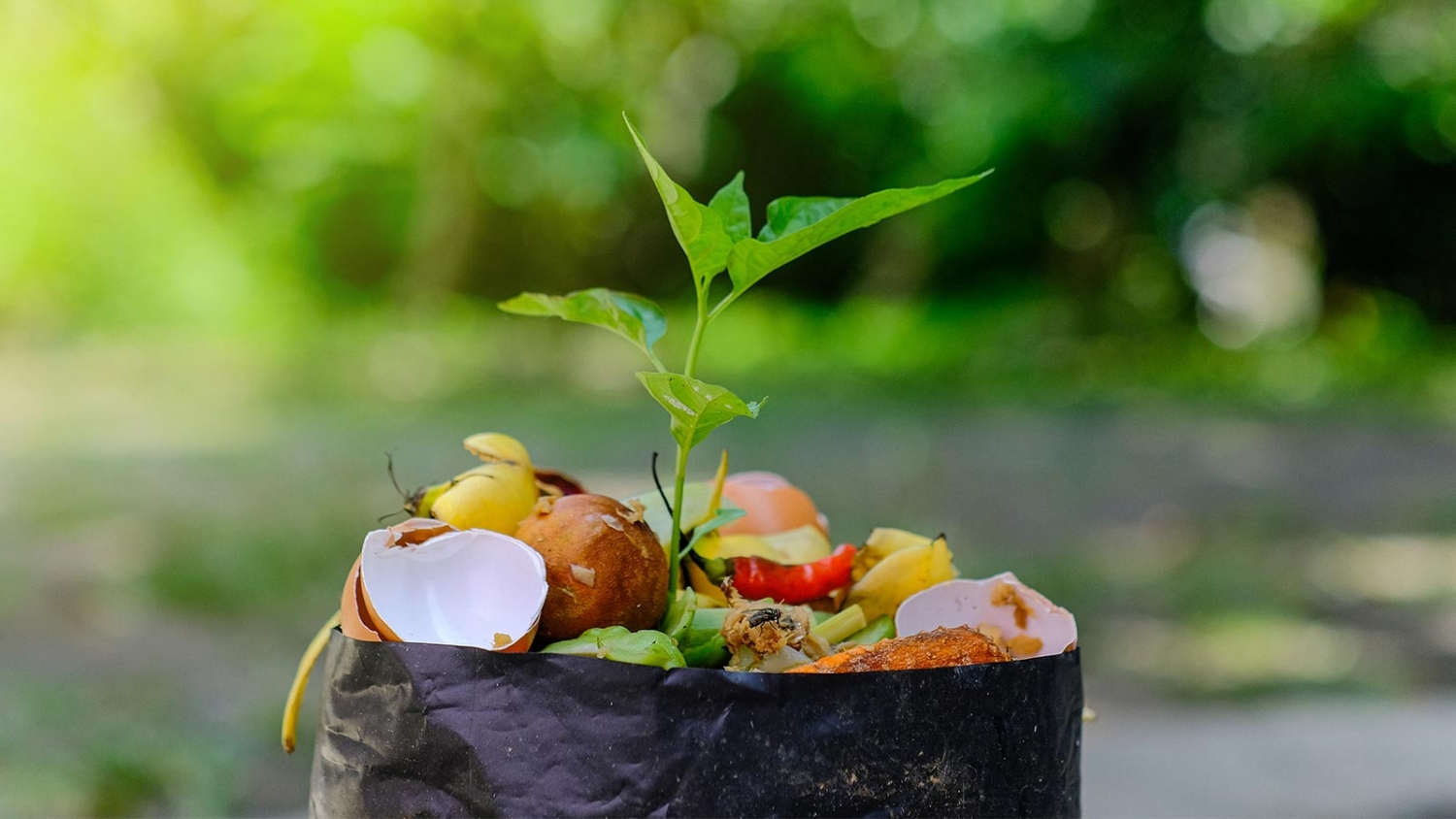
Businesses Must Separate Food Waste From 1 July 2026
May 21, 2026
The NSW EPA has mandated state-wide Food Organics and Garden Organics (FOGO) recycling. This requires food-handling businesses to separate food waste from general waste — and the timeline is only a couple of months away.
What is changing?
Under new legislation, businesses and institutions that sell or handle food, including supermarkets, cafes, restaurants, schools, hospitals, and hotels, must separate food waste from general waste. The mandate will be introduced in stages, based on weekly rubbish bin volumes.
| Effective date | Weekly general waste capacity |
| From 1 July 2026 | 6 or more 660L bins, 16 or more 240L bins, or any combination totalling 3,960L or more. |
| From 1 July 2028 | 3 or more 660L bins, 8 or more 240L bins, or any combination totalling 1,980L or more. |
| From 1 July 2030 | 1 or more 660L bins, 3 or more 240L bins, or any combination totalling 720L or more. |
Non-compliance carries significant risk. Businesses and councils can face maximum penalties of up to $500,000, with a further $50,000 per day for continuing offences. On-the-spot fines of up to $5,000 can also be issued.
Why has this been introduced?
Landfill space in Greater Sydney is expected to run out by 2030. NSW EPA research found that a quarter of all NSW business waste going to landfill is food waste that could be recycled into beneficial products. It also found food waste is the biggest waste material sent to landfill across every business sector, except in healthcare and social assistance[1].
Separating food waste for beneficial reuse reduces landfill pressure, lowers greenhouse gas emissions, and supports a more circular economy where resources are repurposed rather than discarded.
What does this mean in practice?
Businesses in scope will need to set up a separate food waste collection alongside their existing general waste. In practice, this means:
- Talking to your waste service provider to arrange a separate food waste collection service
- Setting up bins or buckets near kitchen benches and other food preparation areas
- Ensuring only approved materials go into food waste bins — this includes food, compostable liners, and fibre-based liners only
- Training staff on correct disposal practices and considering clear signage at bin areas
Businesses completing a waste assessment through the NSW EPA’s Bin Trim program may qualify for rebates of $1,000 to $50,000, covering up to 50% of the cost of eligible small-scale, on-site equipment.
Why this matters for your business
As landfill capacity runs out, waste disposal costs are expected to rise significantly. Understanding how much food waste you generate is the first step to reducing costs and landfill pressure.
From a climate perspective, food waste in landfill produces methane, contributing to your business’s scope 3 emissions. Diverting food waste can support broader emissions reduction efforts.
Waste management is also increasingly important from a regulatory and reporting perspective. Under AASB S2, businesses are expected to consider how rising waste costs, limited landfill capacity, and changing government policies could affect financial performance. Frameworks like GRI also encourage businesses to track and report waste generation and diversion. Improving waste management can demonstrate credible environmental progress to customers, investors, and regulators.
How Cress can help
Cress supports organisations in building sustainability strategies that deliver both environmental and commercial value. This may include establishing a baseline for food waste and emissions, identifying reduction and diversion opportunities, and aligning reporting with AASB S2, GRI, and the GHG Protocol. Cress can also assist in engaging suppliers and internal teams to reduce waste at source, and ensuring governance and data systems are in place to track performance.

Wherever your business is on its sustainability journey, Cress can help assess your current position, identify gaps, set meaningful targets, and implement credible, measurable changes.
Contact us if you have any questions or would like to understand how these requirements apply to your business.
Cress is the Hydroflux Group’s in-house sustainability consulting team, operating as a specialised division and driven by a simple but powerful goal: to help organisations across Australia, New Zealand and the Pacific region create a more sustainable future. As a young and agile team, we combine technical expertise with fresh, forward-thinking approaches to help clients navigate complex challenges across climate risk, emissions reduction, modern slavery, water stewardship, and ESG reporting, building on the Hydroflux legacy of engineering excellence while bringing a sustainability lens to the industries and communities shaping the future of our region.
[1] NSW EPA (2026). Businesses must separate food waste. See more: https://www.epa.nsw.gov.au/Your-environment/Recycling-and-reuse/business-food-waste?li_fat_id=4c422b7d-0190-40fe-84f8-3be8d5b848ee
Up Next